

Symptoms of Mould Exposure: The Signs at Home — and at Work

Indoor Air Quality
Symptoms of Mould Exposure: The Signs at Home — and at Work
What mould exposure does to you, where it hides (including inside your air conditioner), and how to find out whether you actually have a problem.
Here’s something most people don’t realise: you stop smelling your own air. Walk into a building with a musty, mouldy smell and you’ll notice it within seconds — but the people who work there every day often have no idea it’s there. The receptionist who greets you, the staff at their desks, your own family at home: when a smell is constant, the brain simply tunes it out. It’s called olfactory fatigue, and it’s a big part of why mould problems go unnoticed by the very people breathing them in.
So if a visitor has mentioned a musty smell — or you’ve caught one yourself somewhere unfamiliar — it’s worth understanding what mould exposure can do, where it tends to hide, and how to find out whether you actually have a problem.
Common symptoms of mould exposure
Mould affects people differently. Some notice nothing at all; others — particularly those with allergies, asthma, or a weakened immune system — can react strongly. The symptoms most commonly associated with mould exposure include:
- Nasal congestion, a runny nose, or frequent sneezing
- Itchy, red, or watery eyes
- A sore throat or a persistent cough
- Wheezing or shortness of breath, especially for asthma sufferers
- Skin irritation
- Headaches, tiredness, or trouble concentrating
- Worsening of existing asthma or hay fever
One pattern worth paying attention to: symptoms that ease when you leave a building and come back when you return — whether that’s your home or your workplace. That’s a strong hint that something in the environment is the trigger.
A note of honesty: these symptoms overlap heavily with colds, hay fever, and other conditions, so on their own they don’t confirm mould — and this article isn’t medical advice. If your symptoms persist or you’re worried about your health, see your GP.
The signs you can see — and the ones you can’t
Sometimes mould is obvious: black, green, or white patches on walls, ceilings, window frames, grout, and skirting boards; bubbling paint; discoloured cornices. Bathrooms, laundries, and around leaks are usual suspects.
The harder cases are the ones you can’t see — mould growing in wall cavities, under flooring, above ceiling tiles, and in one of the most overlooked places of all: inside your air conditioning system. When there’s a musty smell but no visible cause, hidden mould is very often the answer.
Why your air conditioner is a mould hotspot
Your air conditioner is one of the most common places for mould to take hold, and one of the easiest to miss. The cooling coils run cold, dark, and damp — condensation forms on them every time the system operates. That’s an ideal breeding ground.
Once mould establishes on the coils and in the drain pan, the system does the rest of the work: every time it switches on, it pushes spores and that distinctive musty odour out through the vents and around the room. So that “smell” people notice when they walk into a home or office? It’s frequently the air conditioning itself, quietly recirculating it all day.
The bit most people miss: it’s a workplace problem too
This is where it stops being just a home issue. The exact same thing happens in offices, clinics, shops, and reception areas — often worse, because commercial HVAC moves far more air through far more space.
And the people most exposed are the ones who never notice. Staff sitting at their desks for eight hours, breathing recirculated air they’ve long stopped smelling. For a business, that carries real weight: indoor air quality falls squarely under workplace health and safety duty of care, and poor air quality has been linked to more sick days, reduced concentration, and “sick building” complaints.
Put simply — if a visitor can smell it, your staff and customers are living in it.
What to actually do about it
1. Find out for certain
A musty smell tells you something is off, but not what or where. A DIY Mould & Bacteria Test Kit lets you sample the air or a surface — at home or at work — and confirm whether mould and bacteria are genuinely present, and roughly how heavy the contamination is. It’s a straightforward way to replace “I think it smells” with actual evidence.
The 10-pack suits a whole home or a workplace where you want to test several rooms or air handlers; a 4-pack is plenty for a single problem area.
(To be clear: a test kit identifies whether mould is present in your environment — it doesn’t diagnose health conditions. That’s a conversation for your GP.)

2. Treat it at the source
Clean or remediate any visible mould, and fix the moisture feeding it — leaks, condensation, and poor ventilation are the usual culprits. But if your air conditioning is part of the problem (and it often is), cleaning alone won’t keep it away, because the coils go straight back to being cold and damp the next time the system runs. There are two practical ways to keep treating the air system itself — one you can fit today, one that’s a permanent install.

Drop-in, today: San-Air Reactive Gel
Passive — no installation
A San-Air reactive gel sits in the airflow and slowly releases a vapour designed to suppress mould growth and neutralise the musty odour at the source. No power, no install — you simply place it. It scales with the system: a 15g cartridge for a home split-system head, up to a 250g holder for a ducted or commercial air handler and supply-air grilles. It’s a consumable — replaced periodically — so think of it as ongoing odour and mould control rather than a one-off fix.
Permanent: In-duct UV-C
Active — runs continuously
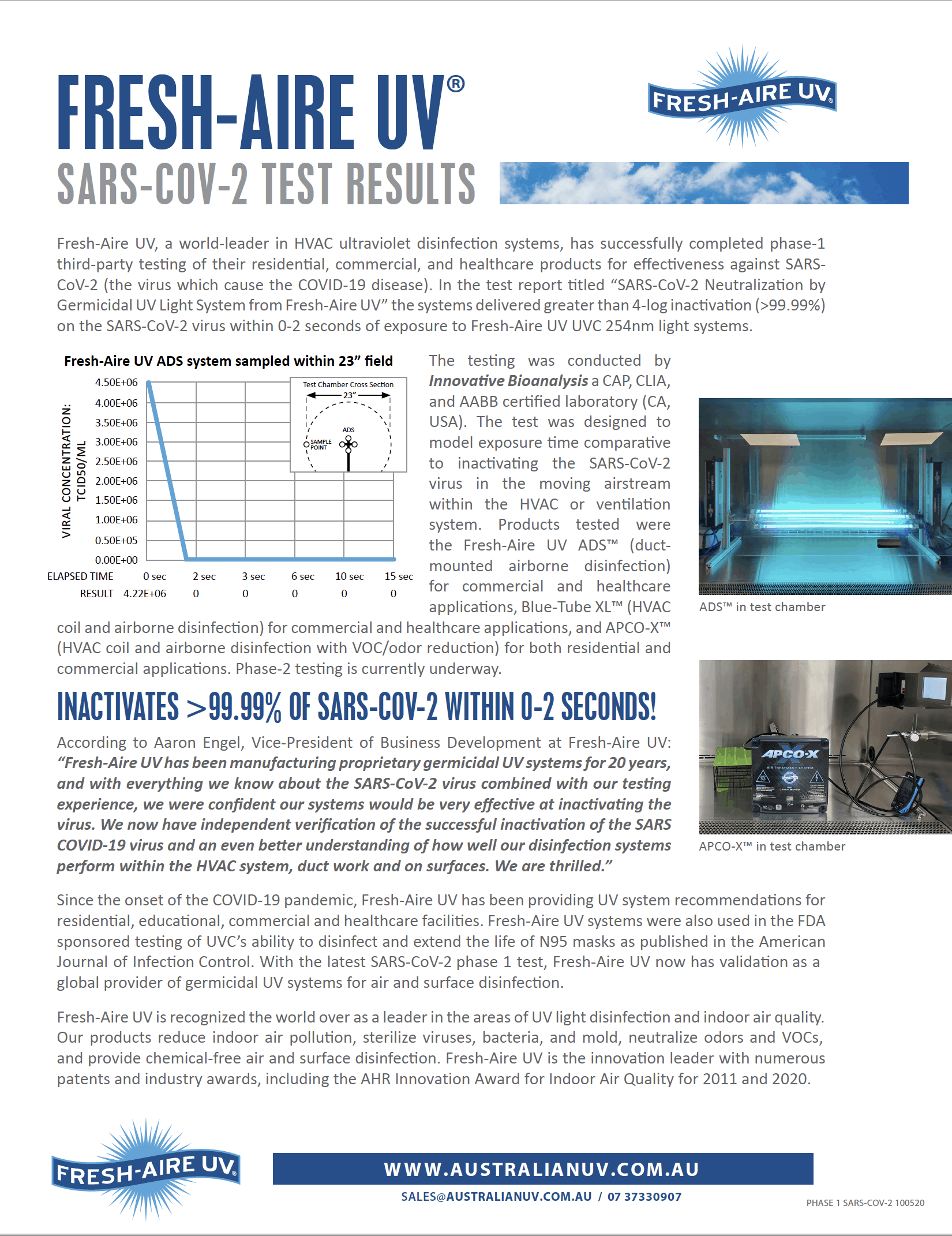
A system like APCO-X installs into the ductwork of a ducted home system or a commercial HVAC unit, combining UV-C light with photocatalytic oxidation. The UV-C helps inhibit microbial growth on the coils and in the airstream, while the photocatalytic stage breaks down odours and VOCs — so it addresses both the mould on the coils and the musty smell it produces. It runs continuously and quietly inside the duct, out of sight.
Being straight about what these do.
UV-C is a disinfection technology, not sterilisation, and the San-Air gel is designed to suppress and control mould and odour — neither “eliminates” mould or stands in for cleaning a system that’s already heavily fouled. Used alongside good maintenance, they keep treated air cleaner and stop the coils quietly becoming a source again. Both approaches work the same way whether it’s a family home or a twenty-desk office — which is exactly why the home and workplace problem have the same fix.
Quick answers
Can mould grow in air conditioners?
Yes. The coils and drain pan are cold and damp — ideal conditions. A musty smell when the AC is running is the most common sign.
Does mould always smell?
No. Hidden mould can be present with very little odour, and if a smell is constant you may have simply stopped noticing it. Both a visible patch and a smell a visitor points out are worth investigating.
How do I know if mould is affecting my health?
You can’t tell from symptoms alone — they overlap with other conditions. See your GP about the health side; a test kit tells you whether mould is actually present in your space.
Can UV help with mould in air conditioning?
In-duct UV-C such as APCO-X helps inhibit growth on AC coils and reduce odours; portable UV-C air purifiers can help lower airborne contaminants in a room. Neither replaces fixing the underlying moisture.
Is mould in the workplace the employer’s responsibility?
Indoor air quality generally falls under workplace health and safety duty of care, so businesses typically have an obligation to provide a safe, healthy environment for staff and visitors.
Musty smell in a workplace or building?
If a smell has been flagged in an office, clinic, food premises, gym or strata building, the air system is the first place to look. Talk to us — we help specify the right approach, from San-Air gel programs through to in-duct UV-C for HVAC systems of any size.
This article is general information, not medical advice. If you’re concerned about symptoms or your health, please consult your doctor.